In our Q1 2026 Investment Outlook, we break down why successful investing isn’t about guessing the next hot stock.; it’s about having a disciplined process to navigate any market condition.
In this Q1 update, we explain the specific indicators—from the THORdex to valuation spreads—that are guiding our decisions for 2026. As Jim Gore explains in the video below, the theme for this year is a classic Wayne Gretzky lesson: “I skate to where the puck is going to be, not where it has been.”
Too many investors are still skating to where the “puck” was in 2025 (US Large Cap Tech). Our data suggests the puck is moving elsewhere.
We use the THORdex, our proprietary stock market risk indicator, to assist with tactical asset allocation decisions.
Right now, the THORdex is signaling elevated risk in domestic markets. This doesn’t mean we sell everything, but it does mean we are tactically reducing exposure to overvalued sectors and the US large cap equity market.
We constantly monitor our indicators that compare stocks vs bonds. In previous years, stocks were the only game in town because bond yields were near zero.
That has changed.
The gap has narrowed significantly, meaning investors are no longer being adequately compensated for the extra risk of holding volatile US stocks. As a result, we are finding attractive opportunities in fixed income that provide steady returns.
This brings us back to the Gretzky analogy. If US Stocks are “where the puck was,” where is it going?
Our data points to Emerging Markets & International Stocks. While the US market is priced for perfection, many emerging economies are trading at valuations we haven’t seen in decades. They have younger demographics, growing middle classes, and unlike the US, their central banks have more room to cut rates to stimulate growth. We believe this valuation gap will begin to close in 2026, offering a potential tailwind for globally diversified portfolios.
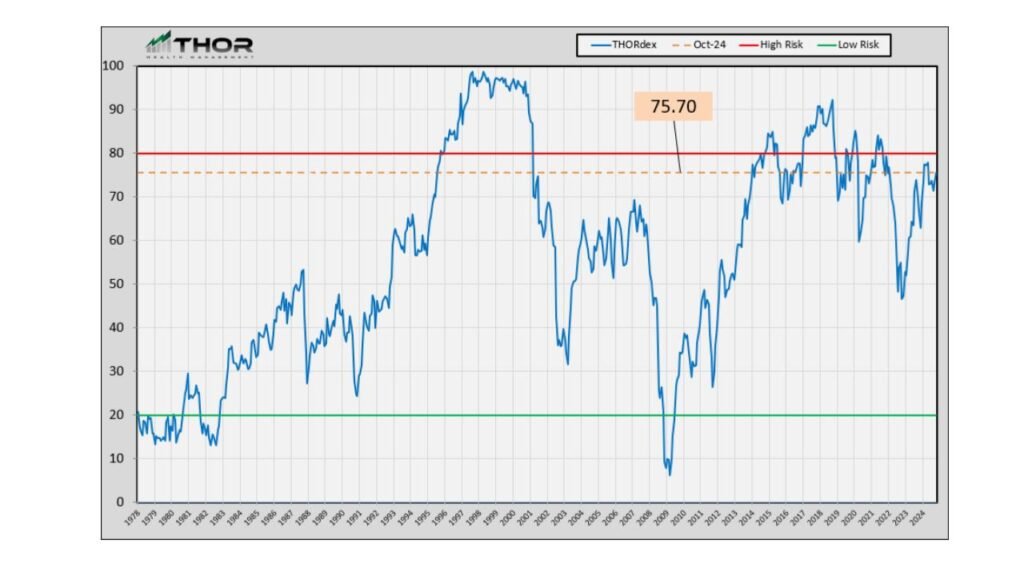
Currently the THORdex is at above 75. This signals that there is elevated risk in the US equity market.
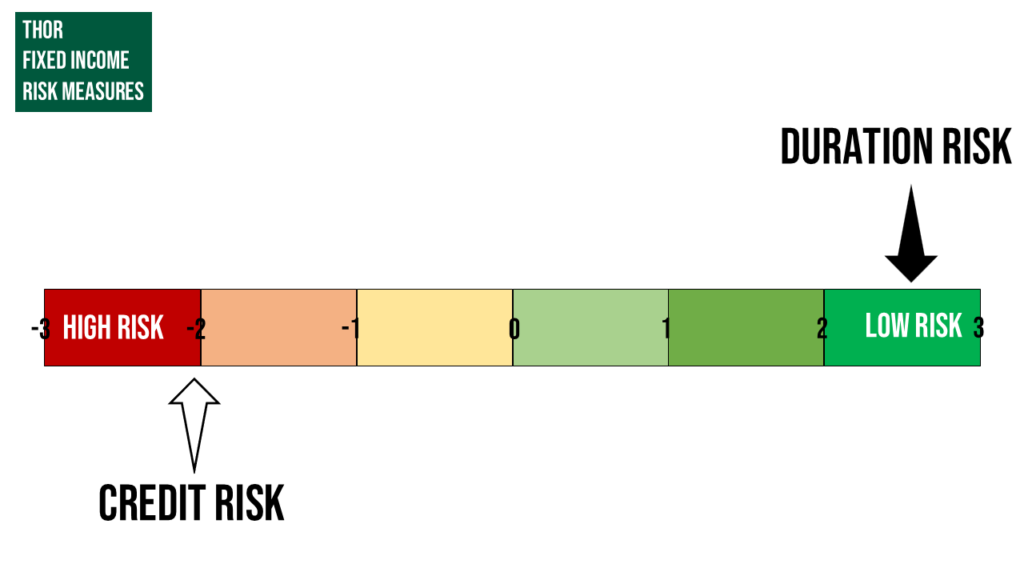
We are seeing mixed signals in fixed income today. There is low levels of risk from a duration standpoint, but credit risk is elevated.
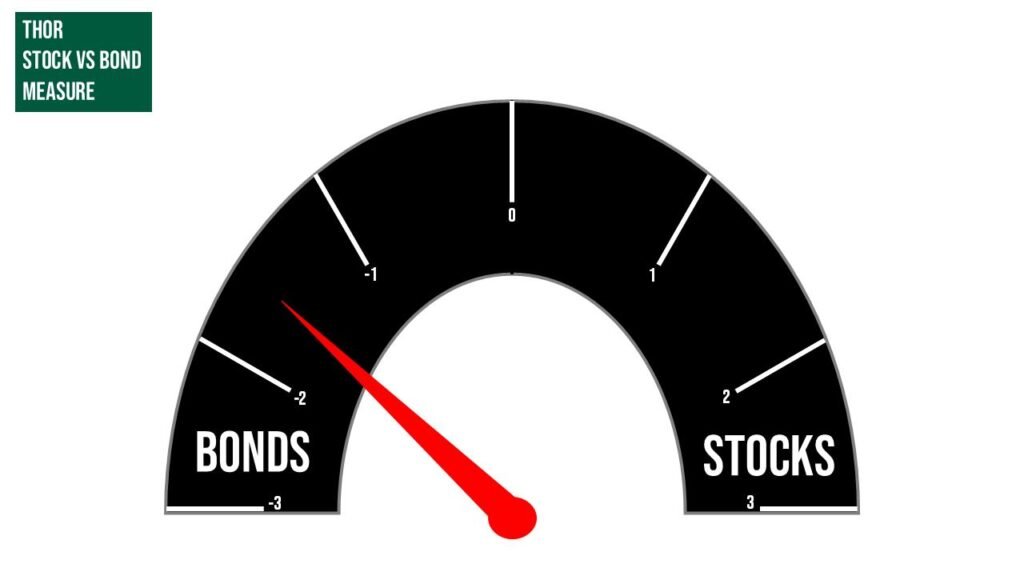
Today on a risk-adjusted basis bonds are showing more value compared to stocks.