If you look at the U.S. stock market today, a surprising trend emerges: there are significantly fewer publicly listed companies now than there were a few decades ago.
Why are companies choosing to stay private longer, or avoiding the public markets altogether? In our latest market update, Jim Gore of THOR Wealth Management examines the regulatory shifts—specifically the Sarbanes-Oxley Act—that have contributed to the decline in publicly traded U.S. companies.
Jim walks through historical IPO examples and market cap trends to show how the landscape has shifted. Finally, he takes a hard look at the alternative: private equity. By comparing private equity expense ratios side-by-side with broad-based index funds, we uncover what this growing gap means for the everyday investor.
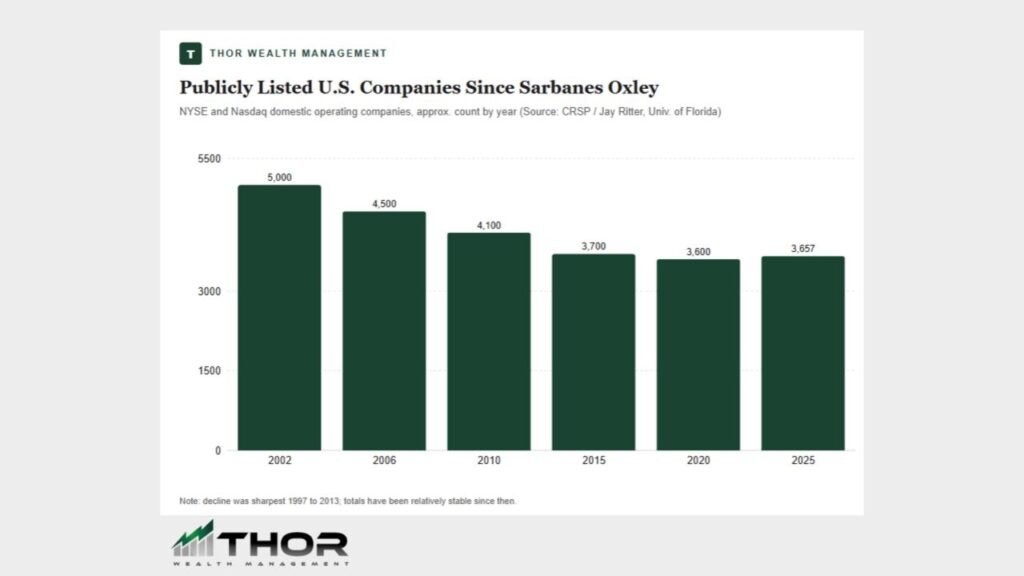
There has been a 25%+ drop in public traded companies since Sarbanes Oxley.
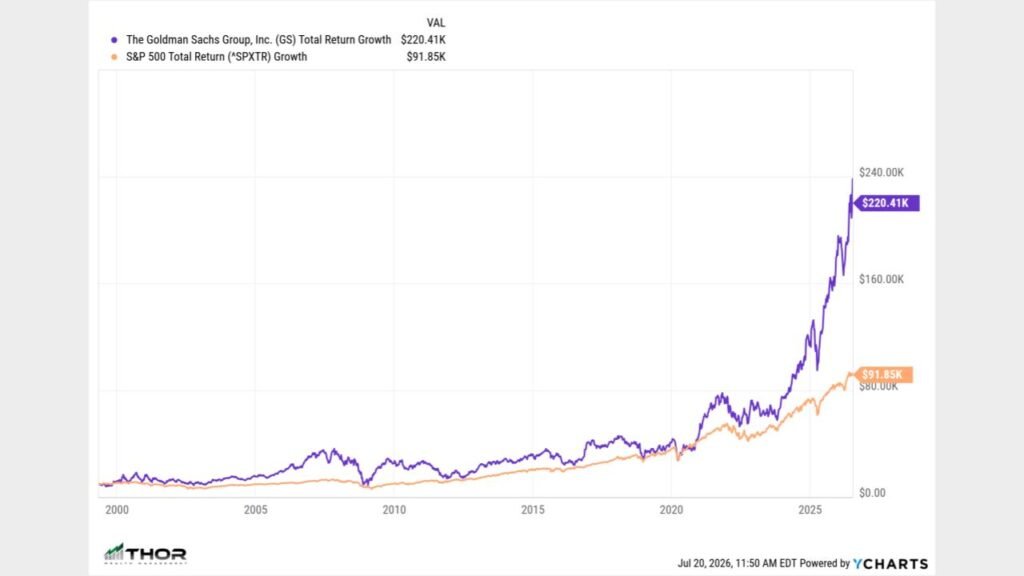
Example of The Goldman Sachs Group Inc (GS) going public in 1999 and forward returns.
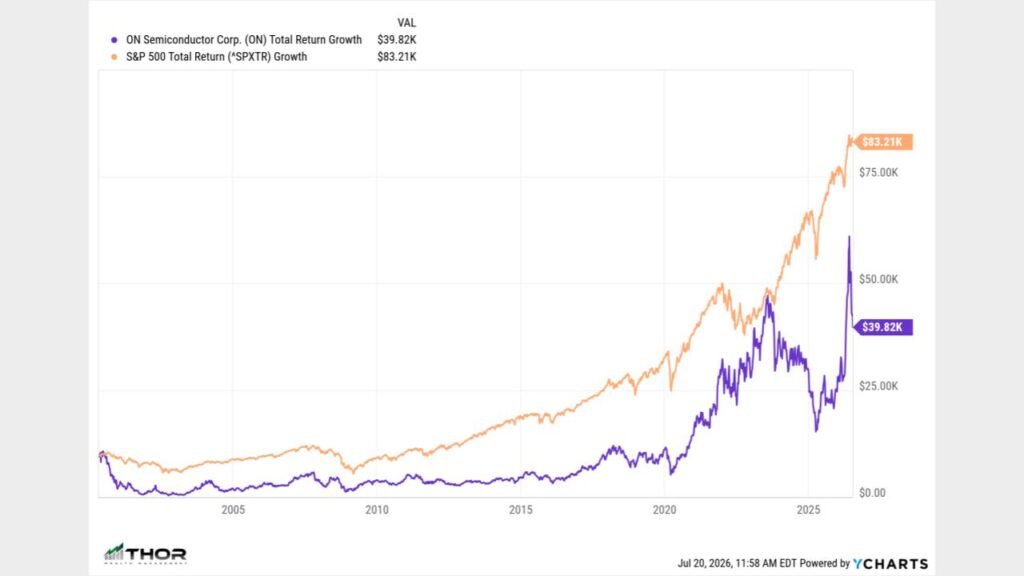
Example of ON Semiconductors (ON) going public in 2000 and forward returns.
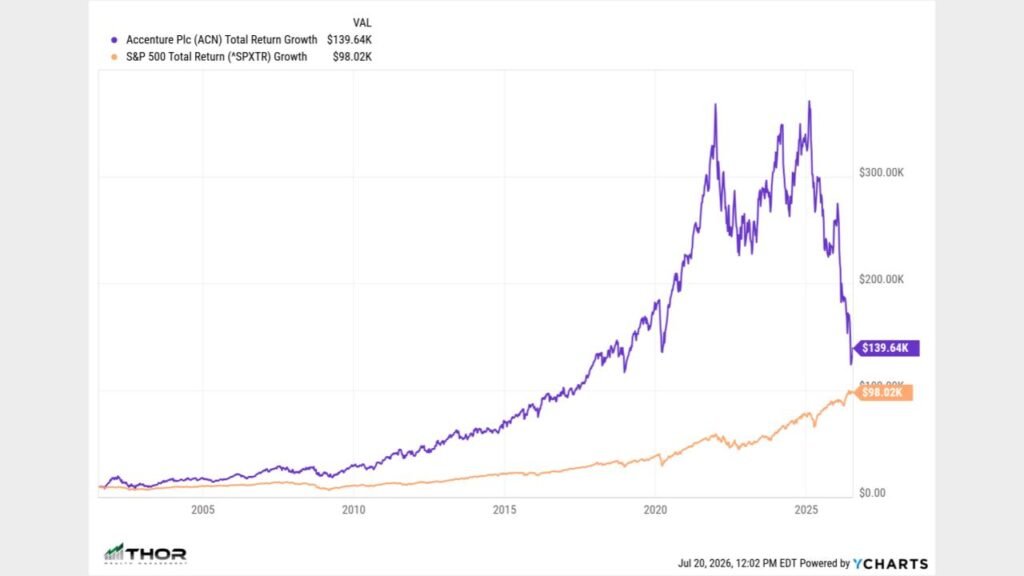
Example of Accenture (ACN) going public in 2001 and forward returns.
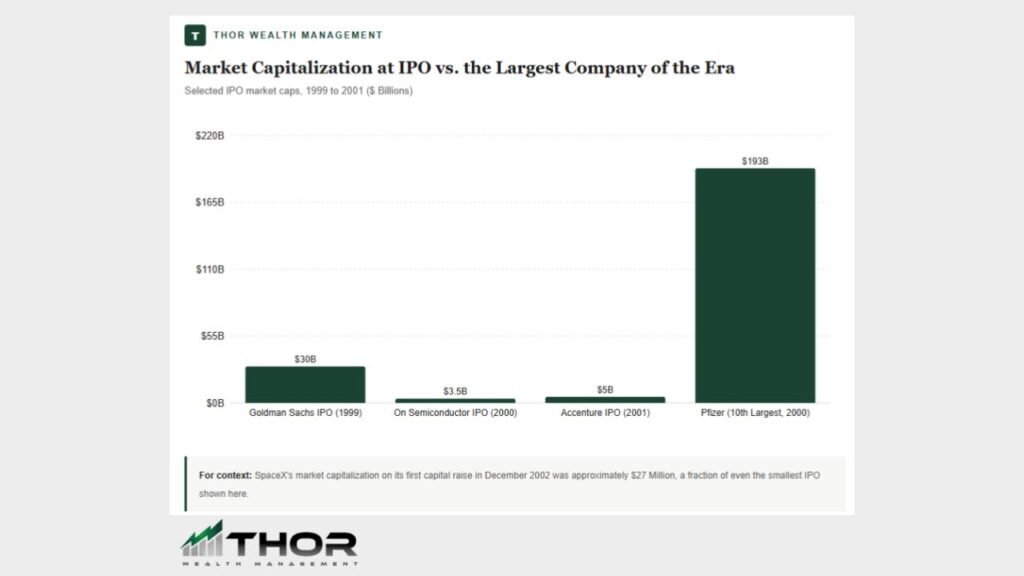
We are seeing massive market cap companies coming to the public market compared to the previous era highlighted.
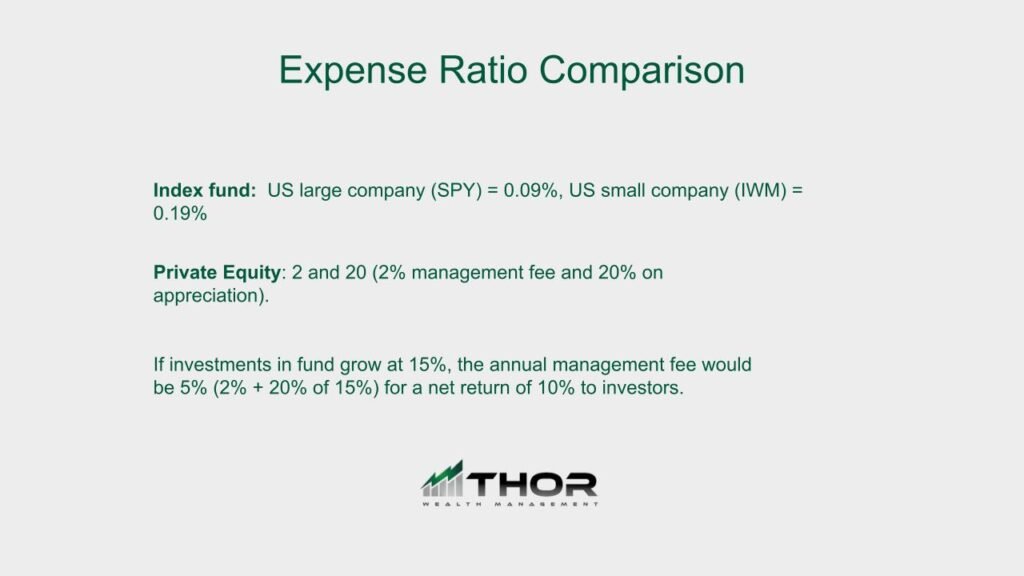
Expenses of private equity is significantly higher than public equity. This is hurting individual investors since there is a current push to add private equity to 401ks. A better solution would be to repeal Sarbanes Oxley. This would cut regulation and increase the pool of public companies available to investors.
As the number of public companies shrinks and alternative investments like private equity grow in popularity, understanding fee structures and liquidity is more important than ever.
At THOR Wealth Management, our investment management strategy prioritizes transparency, objective data, and cost-efficiency. If you have questions about the fees hidden in your portfolio, or want to build a comprehensive financial plan for the future, reach out to our team today.