In this market update, we are revisiting the energy sector following our earlier look at the XLE ETF (Energy Select Sector SPDR Fund) where we noted what appeared to be a developing breakout.
We walk through how things have developed since then, examining price action, momentum, and the significant increase in money flowing into energy stocks. We also discuss a hidden risk for passive investors: why most index funds currently carry very little energy exposure, and what that means for your portfolio in the current macroeconomic environment.
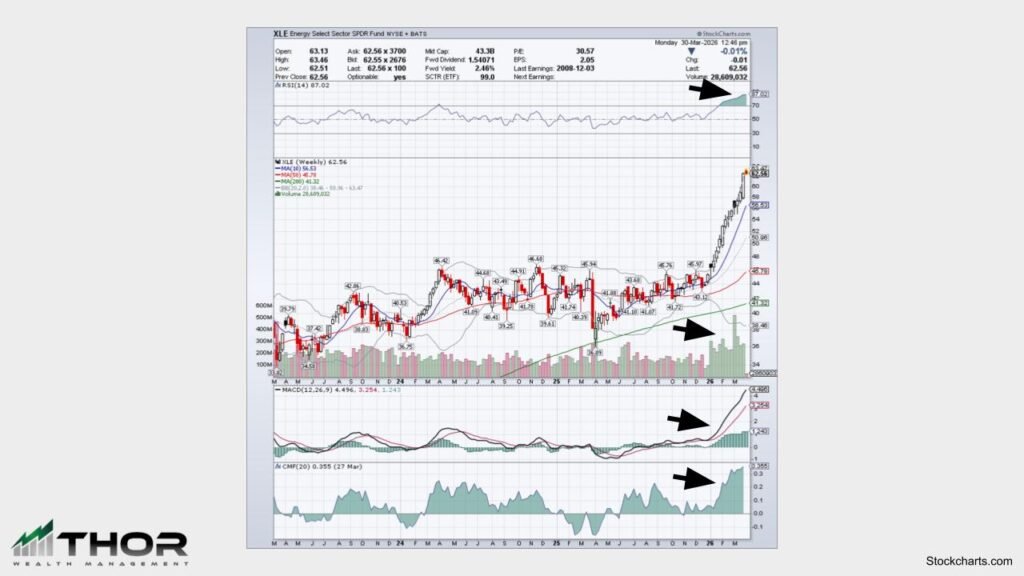
Our previous updated showed a breakout from a long term range. Today we point to sustained positive MACD, money flow, and volume. While these are positive indicators for a continuation of trend, the elevated RSI is a cautionary short term signal.
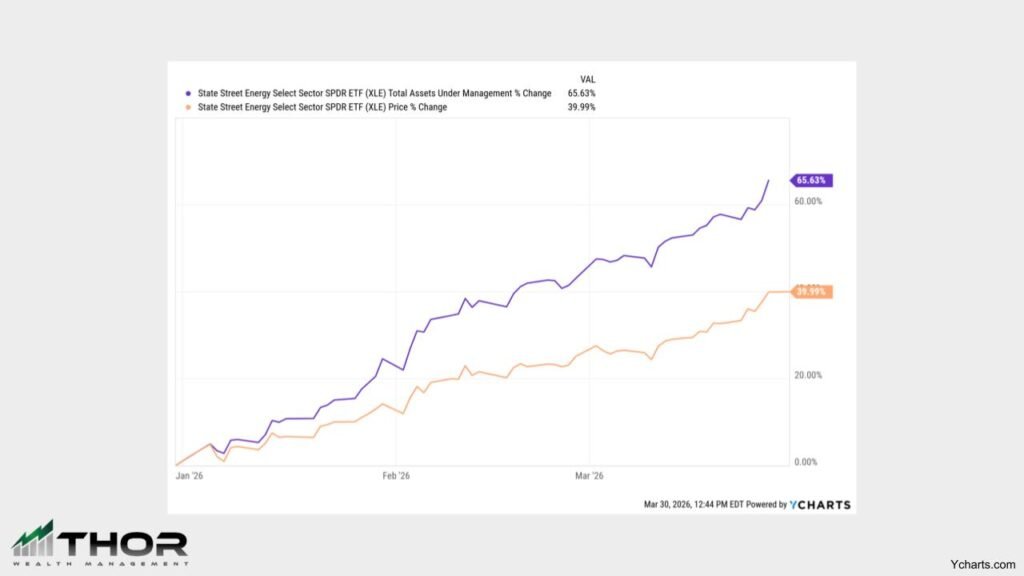
Price action is only part of the story; we also have to follow the money. We look at the significant increase in capital flowing directly into the XLE ETF, indicating shifting sentiment and growing institutional appetite for energy stocks.
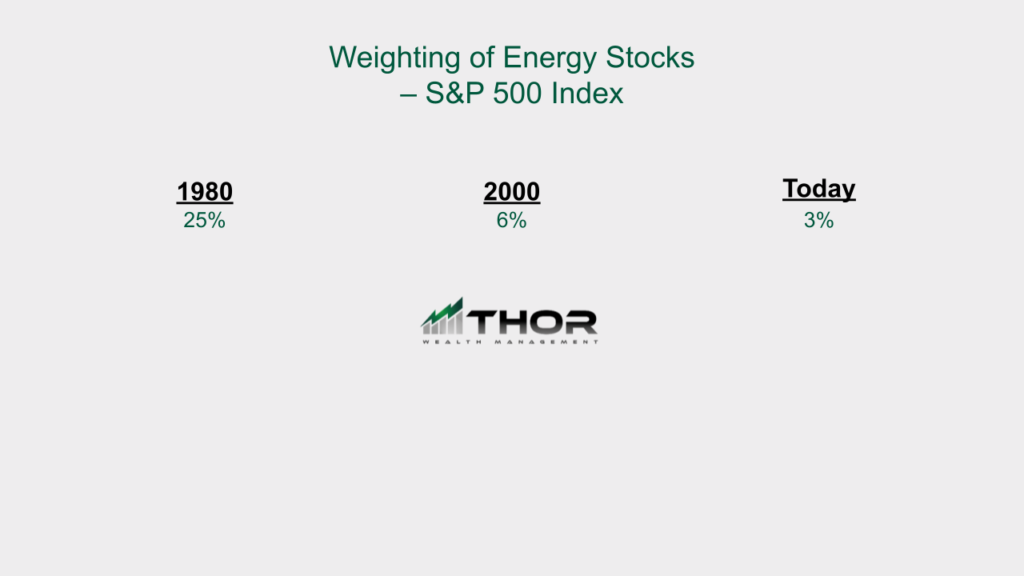
This is a critical segment for anyone holding an S&P 500 index fund. We discuss why most passive index investors actually carry very little energy exposure today. We compare the current market weighting of the energy sector to historical highs (like in 1980) and explain why being underweight in energy could be a risk in today’s environment.
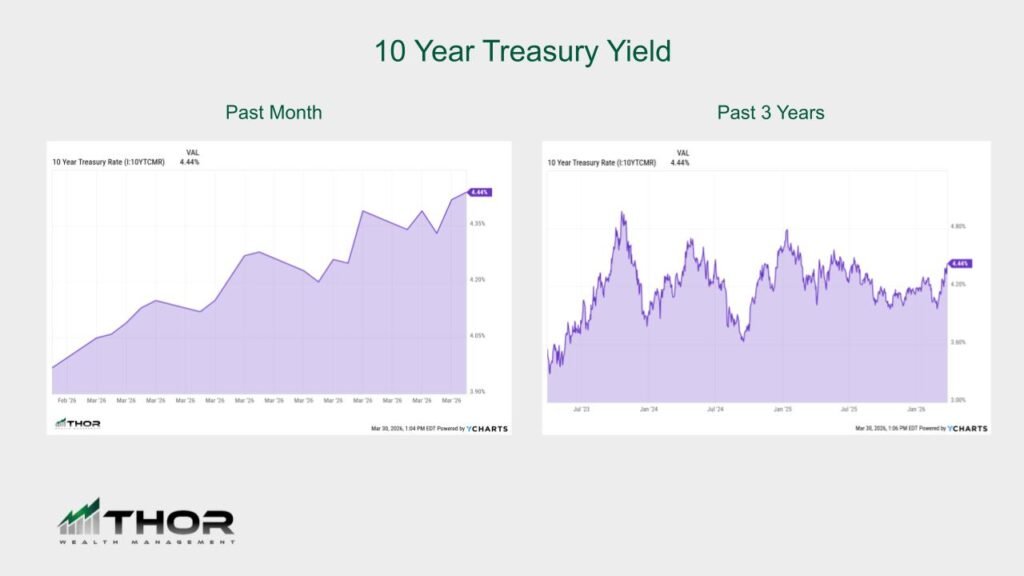
To wrap up, we zoom out to look at the broader macro picture by analyzing the 10-Year Treasury Yield. Interest rates and bond yields play a massive role in sector rotation, and we discuss how the current yield environment is impacting energy and the broader market.
At THOR Wealth Management, keeping a close eye on sector momentum, fund flows, and historical weightings is just one aspect of our comprehensive approach to researching the markets.
By utilizing a variety of tools—including technical analysis—we are able to evaluate market conditions from multiple angles rather than relying on a single data point. This broad, objective perspective helps us identify emerging opportunities and actively manage the hidden risks that are often embedded in standard passive index funds.
To learn more about how we build portfolios, explore our investment management service page.