



Wednesdays at my daughter’s nursery school is “show and tell” day—which I assume is more of a “show-thing,” because every time I ask her what she is going to tell, she says, “I don’t know.” If the whole class is like my daughter, they would run out of things to say by the billionth kitty stuffie they bring in.
But since she loves cats, I recently told her about the saber-tooth cat. It is now one of her favorites (sorry, cheetah) and is well integrated into her play and art.
Well, I would not categorize passive investing as a saber-tooth cat. Sorry, but passive investing is not that cool. Instead, I would compare passive investing to a narwhal.
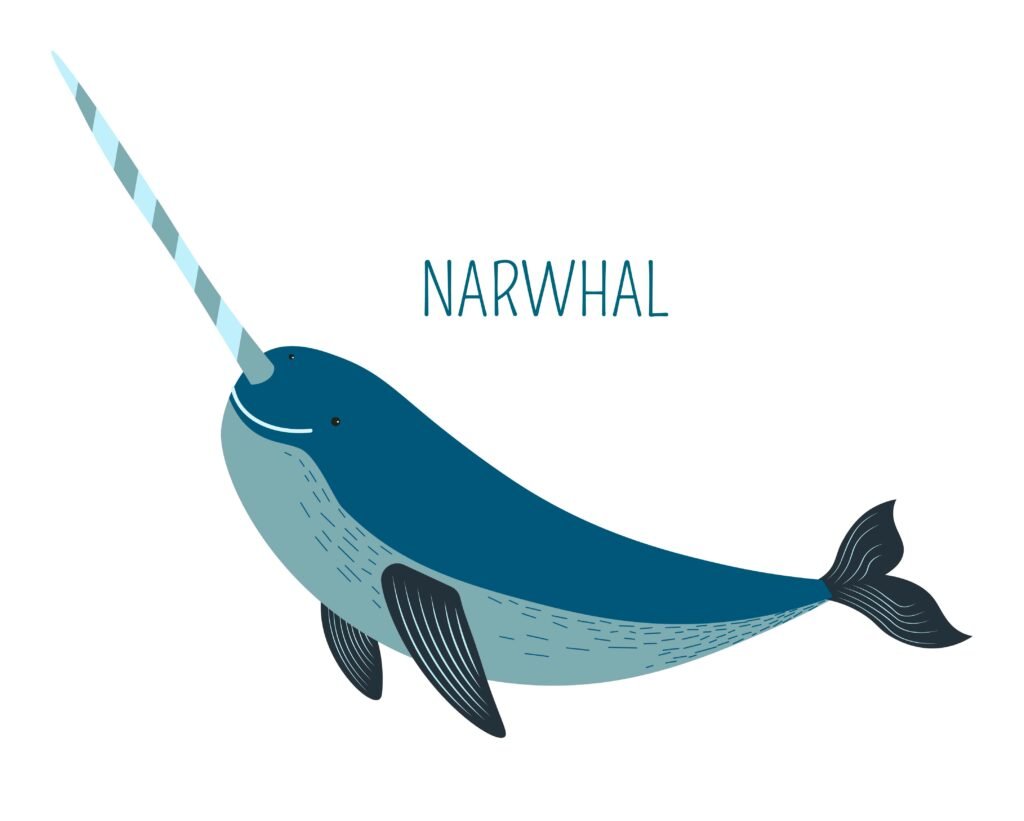
Why? Because the myth of a narwhal is stronger than the actual creature. I bet most people don’t even know it’s a real animal, let alone that its “horn” is actually an elongated tooth. Also, while there are plenty of narwhals, most people will never see one. They live at the edge of the world in arctic seas, are skittish, and don’t survive in captivity.
To be clear, I do think passive investing as a philosophy exists. The philosophy is that an investor wants to “be the market” and not try to “beat the market.” The philosophy is real, and so is the growing list of products to support it. But this is where the existence of passive investing ends.
The Paradox of Passive Investing
Passive investment management is all about not making decisions or bets. The problem is that this is entirely unrealistic in practice. Let’s explore why:
Decision #1: Choosing Your Market & Product
If you decide you want to go passive, you still have to make a decision. This is the first paradox of passive investing.
I hate to break it to you, but there is no single “market.” You must decide on your allocation and the specific products to buy. US investors used to consider the Dow Jones Industrial Average to be “the market,” but even the popularity for that index has shifted to the market-cap and growth-driven S&P 500 and NASDAQ.
Indices, and the investment products that track them, are not all created equal. They differ not only in what they can own (specific geographies or sectors) but also in how they are constructed (equal diversification vs. market cap weighting). And that is only touching on equities. If you want to diversify into other asset classes, the indices and products that track them are even more decentralized.
Plus, you must make another active decision: what asset classes to include and what weightings. These are all massive decisions if your plan is to hold them indefinitely.
Decision #2: Staying the Course
Once you have made your decision on your initial allocation and products, you must continually make the decision to stay the course. That is the tough part.
Mike Tyson said it best: “Everyone has a plan till they get punched in the mouth.” Because there are unlimited rounds in investing, you are bound to get punched in the mouth. Making the wrong decision at the wrong time can completely derail your financial plan. It is also during the times when the stakes are highest—such as when you have a large account value, or there is extreme stress in the market—that we are most prone to making a costly misstep.
Your Financial Life is Not Static
The other aspect that makes true passive investing incredibly rare is that your financial life is not static. You may be awarded stock options at your job, decide to buy a business, or even face an unexpected job loss.
Not only do these events create deviations in a passive philosophy, but taking a static, “set it and forget it” approach to your portfolio when your life changes can create a misalignment between your money and your goals.
At THOR Wealth Management, we are an active investment manager. This is by design. We actively manage portfolios to help our clients stay the course long-term and focus on aligned, risk-adjusted returns.
Too often, the financial industry glorifies the “narwhal” that is passive investing. But in practice, it’s a completely different animal.